Sustainable
made
Reliable


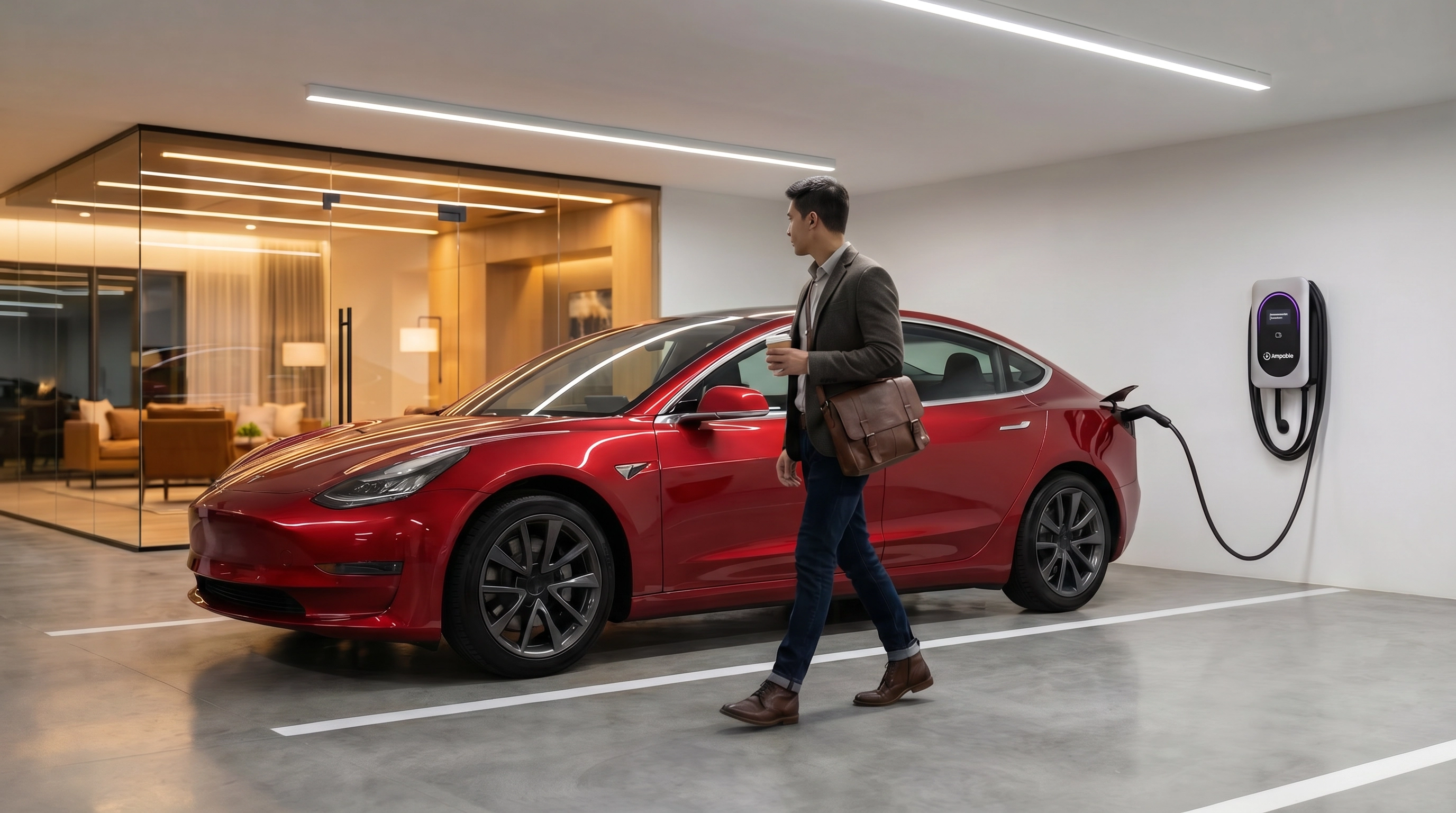
By 2030, nearly one in three new cars sold in the U.S. is expected to be electric, and most of those drivers will need to charge where they live. For the roughly 31% of American households that live in multifamily housing, "home" is an apartment, or condo. Right now, the vast majority of those buildings have no EV charging at all.
For multifamily owners, asset managers, and developers, that gap is more than a convenience issue. It is a shifting competitive landscape, a measurable NOI opportunity, and, increasingly, a regulatory clock. Properties that move early are positioned to capture rent premiums, attract long-term residents, and protect asset value. Properties that wait will pay more to catch up, and they risk losing renters to buildings that didn't.
The shift isn't speculative. It's backed by clear data, and the window to act on favorable economics is open now.
The Demand for EV Charging in Multifamily Is Already Here
Access to EV charging is quickly becoming a differentiator for multifamily properties, and in many cases, a deciding factor for renters.
A survey from the National Multifamily Housing Council found that 27% of renters would pay more each month for access to EV charging, with an average willingness to pay of roughly $28 per month. Nearly one-third of renters now view EV charging as a must-have amenity, yet only a small fraction of multifamily buildings currently provide it.
Meanwhile, EV adoption keeps accelerating:
- U.S. EV sales reached 1.58 million vehicles in 2024, and global EV sales continue to grow rapidly year-over-year (International Energy Agency).
- EVs are projected to account for nearly half of new vehicle sales in the U.S. by 2030 (McKinsey & Company).
- Roughly 31% of U.S. households live in multifamily housing (NAHB), yet only a small percentage of multifamily properties currently offer onsite EV charging.
The result is a clear and widening gap between resident demand and property capability, and that gap has a cost attached to it.
Why EV Charging Matters to Your NOI
For owners and asset managers, the strongest financial case for EV charging isn't the charging fee itself. It's what EV charging as an amenity does to property performance. The NOI lift shows up as value residents experience, not cost they resent.
Rent Premiums
Residents who own or plan to own an EV are willing to pay more in rent for a building that solves their home charging problem. NMHC data puts that willingness at around $28 per month on average. Across a multifamily asset, those premiums compound meaningfully over a 12-month lease and scale as EV adoption grows.
Higher Occupancy and Faster Leasing
EV charging is a clear tiebreaker in competitive submarkets. When a prospective resident is choosing between two comparable buildings and one offers charging, the decision is often made before they walk the unit. Faster lease-up and sustained higher occupancy both flow directly to NOI.
Stronger Resident Retention
EV drivers tend to be longer-tenured, higher-earning residents. Once a resident settles into a building that reliably charges their vehicle at home, the cost of moving, both practical and emotional, goes up. Lower turnover reduces one of the largest line items eroding multifamily NOI.
Asset Value Uplift
Because multifamily valuations are driven by NOI and cap rates, amenity-driven NOI gains translate directly into higher property value. EV-ready properties also carry stronger positioning in refinancing conversations, sale underwriting, and portfolio-level investor narratives.
Fair, Cost-Based Usage Fees
In a well-designed charging program, residents pay only for the electricity they actually use, at transparent, fair rates. Those fees cover the cost of power and contribute a modest revenue share to the property, but they are not the headline of the NOI story. The headline is the amenity itself: an experience residents want, priced fairly, that lifts the entire building's performance.
A Growing Gap and a Strategic Opportunity
Most EV drivers prefer to charge at home. For single-family homeowners, that is straightforward. For renters in multifamily housing, it is often simply not an option.
That creates a clear opening for owners and developers who act early:
- Meaningful property differentiation in increasingly competitive submarkets
- Stronger appeal to higher-income, longer-tenured residents
- A modern, forward-thinking brand perception that carries across a portfolio
- A head start on incoming state and municipal EV-ready requirements
As EV adoption continues to rise, the supply-demand gap is likely to widen before it closes. Early movers capture the premium; late movers pay to catch up.
What EV Charging Unlocks for Multifamily Owners
Stronger Market Position
As more renters consider EV ownership, access to at-home charging becomes a deciding factor in where they lease. Properties that offer EV charging stand out in a competitive leasing environment, especially in urban and suburban markets with higher EV adoption.
A Higher-Quality Resident Base
EV drivers tend to be higher-earning, technology-forward, and long-tenured. Providing charging aligns your property with the expectations of exactly the kind of resident operators want to attract and retain.
An Amenity That Pays for Itself
Residents pay only for the electricity they use, at fair usage-based rates. In a fully managed model, those fees cover operating costs and deliver a modest revenue share back to the property, so the amenity improves the resident experience without becoming a new line item on the property budget.
Reduced Regulatory Risk
Cities and states across the country are introducing EV-ready requirements for new construction and major renovations, from California's Title 24 to similar codes in New York, Washington, and Colorado. Planning ahead helps avoid the far higher cost of reactive retrofits later.
Tax Credits and Incentives Working in Your Favor
The federal government and many states are actively subsidizing multifamily EV infrastructure, which makes the economics of acting now meaningfully better than waiting.
Federal 30C Alternative Fuel Infrastructure Credit: The Inflation Reduction Act's 30C credit covers up to 30% of qualified EV charger costs (capped at $100,000 per charger) for properties in eligible census tracts. Many multifamily sites qualify.
Utility Make-Ready Programs: Major utilities in states like California, New York, New Jersey, Massachusetts, and Illinois offer make-ready programs that cover a significant portion of the electrical infrastructure costs associated with EV charging installations.
State and Local Rebates: Numerous states and cities offer additional rebates specifically for multifamily EV charging, and they stack with federal and utility programs.
These incentive programs materially reduce, and in some cases effectively eliminate, the upfront cost of deployment. But many are time-limited or subject to annual caps, which is why the economics are most favorable for properties that act early.
Taking a Practical, Phased Approach
For many owners, the challenge isn't understanding the value of EV charging. The harder part is figuring out how to implement it without adding cost or operational complexity.
A phased approach works best:
- Start with a small initial deployment sized to your current EV-driving residents
- Monitor usage patterns, resident behavior, and leasing impact
- Expand infrastructure strategically as utilization grows
- Use software-driven load management to optimize performance and electrical capacity
This approach lets properties move forward confidently without overcommitting upfront capital or electrical capacity.
Removing the Biggest Barriers: The Fully Managed Model
Historically, EV charging in multifamily has been difficult to deploy due to three persistent barriers:
- High upfront capital costs and unclear payback
- Electrical panel and service capacity constraints
- Ongoing operational complexity across billing, maintenance, support, and software
Newer fully managed models are designed to eliminate all three.
Ampable's EV Charging as a Service model lets multifamily properties install and operate EV charging with zero CapEx and zero OpEx. Ampable handles site assessment, hardware, professional installation, utility coordination, 24/7 monitoring, preventive maintenance, tenant support, and billing. Property owners share in the revenue the system generates, without adding capital outlay, electrical upgrades, or staff workload.
The Ampable software platform handles load management, fair usage-based pricing, and utilization analytics automatically, so properties capture the amenity value without becoming EV operators themselves.
For multifamily owners, this reframes EV charging from a capital project into a managed amenity that drives leasing, supports retention, and builds long-term asset value from day one.
EV Charging as a Long-Term Asset Strategy
Many multifamily amenities that once felt optional (high-speed internet, package lockers, smart access, in-unit laundry) are now table stakes. EV charging is on the same trajectory, only faster.
Preparing your property today isn't just about keeping up with trends. It's about:
- Protecting long-term asset value and cap rate
- Capturing rent premiums and retention value as EV adoption grows
- Increasing resident satisfaction and lifetime value
- Avoiding the much higher cost of reactive retrofits
For newer developments, EV readiness strengthens the competitive position from day one. For existing properties, early adoption creates flexibility and reduces long-term risk.
Looking Ahead
The transition to electric vehicles is already underway. The question for multifamily owners is no longer if EV charging will matter. The real question is when, and whether you'll capture the upside or absorb the cost of falling behind.
Properties that plan ahead will be better positioned to meet resident expectations, capture new NOI, and remain competitive in a rapidly evolving market.
Ready to Future-Proof Your Portfolio?
EV charging no longer has to mean capital commitments, electrical upgrades, or operational headaches. If you're evaluating EV charging for one property or across an entire portfolio, Ampable offers a fully managed program designed for multifamily owners, asset managers, and developers, with zero CapEx, zero OpEx, and a direct path to amenity-driven NOI.
Schedule a portfolio assessment or explore our solution to see what EV charging could look like at your property.